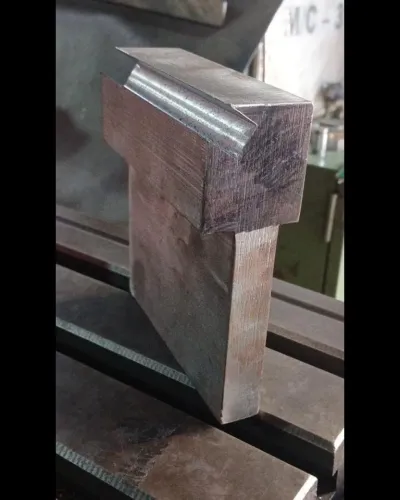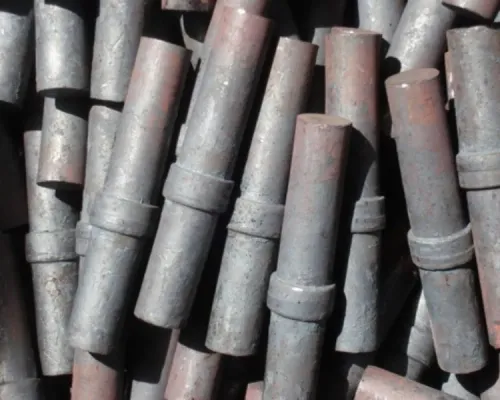
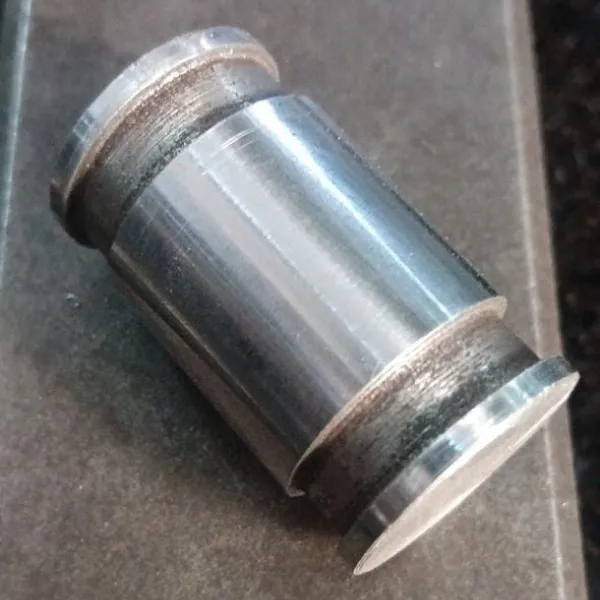
A typical lock pin is manufactured by CNC turning or automatic lathe machining, followed by deburring, heat treatment/plating if required, and inspection.
Typical manufacturing process
- Raw material
- Use round bar according to the drawing.
- Common materials: EN8/C45, EN19/4140, stainless steel, or case-hardening steel depending on application.
- Cutting
- Cut the bar to the required blank length.
- Maintain a small allowance for facing and finishing.
- CNC turning
- Face the first end.
- Turn the outside diameter to the required dimension.
- Machine steps, shoulders, grooves, chamfers, or radii.
- Drill/ream any required internal hole.
- Part off to length.
- Reverse and finish the second end if necessary.
- Deburring
- Remove sharp edges and burrs.
- Pay particular attention to grooves, holes, and chamfers.
- Heat treatment
- If specified by the drawing, perform hardening, tempering, or case hardening.
- Typical hardness depends on the material and locking application.
- Surface finishing
- Depending on requirements: black oxide, zinc plating, nickel plating, passivation, or polishing.
- Final inspection
- Check diameter with a micrometer.
- Check length with a vernier/caliper or height gauge.
- Check grooves and shoulders with appropriate gauges.
- Check hole diameter with plug gauges if applicable.
- Check hardness and surface finish when specified.
- Perform functional fit with the mating lock component.
Keywords